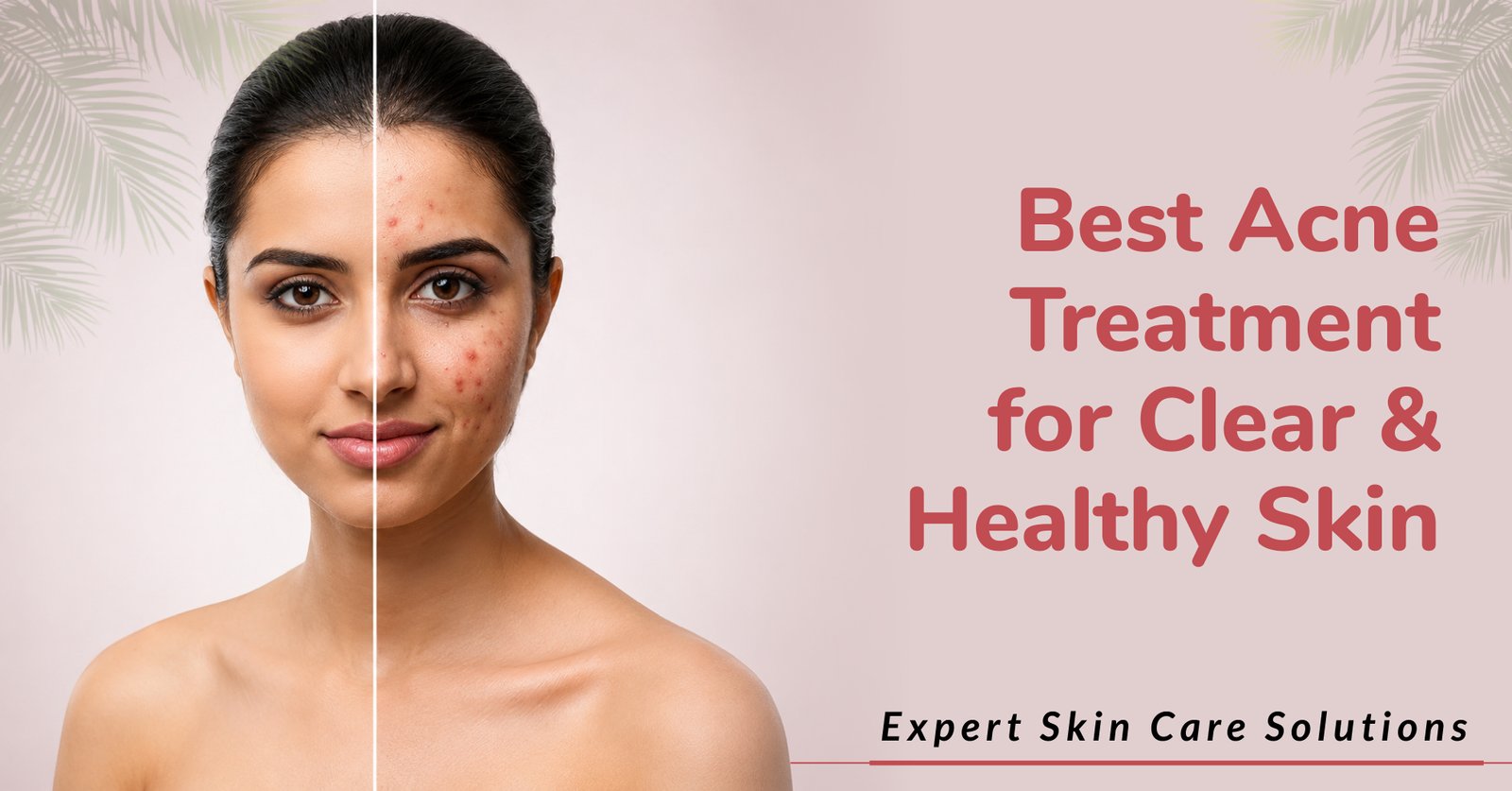
Acne is the most common skin condition in India — and yet, it remains one of the most undertreated ones. Millions of people in Lucknow manage breakouts with pharmacy creams, home remedies, and online advice without understanding the underlying cause of their acne. Consulting a qualified dermatologist can help identify the right treatment approach.
If you've been living with acne for months or years without real results, this guide is for you. Written in consultation with Dr. Damini Verma (MD, DNB Dermatology) — one of Lucknow's leading skin specialists — it covers everything from understanding your acne type to the most advanced treatment options available today.
What Is Acne? (And Why Is It So Hard to Treat?)
Acne is a chronic inflammatory skin condition that affects the pilosebaceous unit — the hair follicle and its attached oil gland. When excess sebum, dead skin cells, and bacteria combine inside a pore, the result is the pimples, cysts, blackheads, and whiteheads we recognise as acne.
What makes it difficult to treat is that acne has multiple simultaneous causes:
- Overactive oil (sebum) glands — often triggered by hormones
- Abnormal skin cell turnover that blocks follicles
- Overgrowth of Cutibacterium acnes bacteria
- Chronic, low-grade skin inflammation
Over-the-counter products typically target only one of these factors. That's why they may not always provide long-term improvement, and why professional acne treatment can help address the underlying causes more effectively.
Types of Acne: Know What You're Dealing With
Before any treatment is prescribed, it's critical to identify the correct type of acne. Using the wrong treatment for the wrong type can make acne worse.
Non-Inflammatory Acne
- Whiteheads (closed comedones) — clogged pores covered by skin
- Blackheads (open comedones) — clogged pores open to air; the dark colour comes from oxidised melanin, not dirt
Inflammatory Acne
- Papules — small, raised, red bumps without pus
- Pustules — red bumps filled with pus (classic "pimples")
- Nodules — large, hard, painful lumps deep in the skin
- Cysts — the most severe type; deep, pus-filled lesions that almost always scar
Hormonal Acne
A distinct pattern — usually papules and cysts along the jawline, chin, and lower cheeks — that worsens around menstruation or with PCOS. Extremely common in women aged 20–35 and requires a hormonal treatment approach.
Adult Acne
Breakouts that begin or persist after the age of 25. Often hormonal, stress-driven, or product-related. Frequently misdiagnosed as teenage acne and mistreated as a result.
What Causes Acne? The Real Triggers Behind Breakouts
Understanding your personal triggers is one of the most powerful tools in managing acne long-term.
Hormones
Androgens (testosterone and its derivatives) are the primary driver of acne in most people. They stimulate oil glands to enlarge and produce more sebum. This is why acne peaks at puberty, worsens before periods, and is strongly associated with PCOS.
Diet
Research increasingly links high-glycaemic foods (white bread, sugary drinks, processed snacks) and dairy products to acne flares. These foods spike insulin and IGF-1 levels, which in turn stimulate oil production and skin inflammation.
Stress
Stress triggers cortisol release — a hormone that directly stimulates sebaceous glands. This is why exam season, work pressure, or major life events often coincide with acne flares.
Wrong Skincare Products
Heavy moisturisers, silicone-based primers, and certain sunscreens can be comedogenic (pore-clogging). Using the wrong products while undergoing treatment is one of the most common — and fixable — reasons treatment fails.
Gut Health
Emerging research links gut microbiome imbalances with systemic inflammation, which manifests on the skin. Patients with chronic digestive issues sometimes see unexplained, persistent acne that improves when gut health is addressed.
Acne Treatment in Lucknow: The Dr. Damini Protocol
At Dr. Damini's Skin & Hair Clinic, acne is treated as the medical condition it is — not a cosmetic inconvenience. Every patient receives a comprehensive evaluation before any prescription or procedure is recommended.
Stage 1: Clinical Evaluation
The first appointment involves:
- A detailed skin history — how long, what type, which areas, previous treatments tried
- Identification of triggers — hormonal, dietary, product-related, or systemic
- Grading of acne severity (Grade I to Grade IV)
- Assessment for scarring or hyperpigmentation already present
This step determines everything. A Grade II hormonal acne patient and a Grade IV cystic acne patient require completely different treatment pathways.
Stage 2: Medical Treatment
Based on the evaluation, pimple treatment in Lucknow at Dr. Damini's clinic may involve one or more of the following:
Topical Medications
- Retinoids (tretinoin, adapalene) — unblock pores, normalise skin cell turnover, reduce inflammation
- Benzoyl peroxide — kills surface bacteria, prevents antibiotic resistance
- Azelaic acid — anti-inflammatory, effective for dark marks alongside acne
- Clindamycin/erythromycin combinations — reduce bacterial load
Oral Medications
- Antibiotics (doxycycline, minocycline) — for moderate to severe inflammatory acne; used short-term to prevent resistance
- Hormonal therapy (oral contraceptives, spironolactone) — for women with confirmed hormonal acne or PCOS-related breakouts
- Isotretinoin — the most powerful acne medication available; reserved for severe, scarring, or treatment-resistant acne; carefully monitored by Dr. Damini throughout the course
Stage 3: In-Clinic Procedures
Procedures complement medical treatment by accelerating results, clearing congested pores, and preventing scarring:
- Chemical Peels for Acne — Salicylic acid and glycolic acid peels are highly effective for acne-prone skin. They exfoliate the skin's surface, unclog pores, reduce sebum production, and fade post-acne dark marks. A course of 4–6 peels spaced 2–3 weeks apart delivers visible improvement in both active acne and skin texture.
- Comedone Extraction — Professional, sterile extraction of blackheads and whiteheads. Far safer than home squeezing, which pushes bacteria deeper and causes post-inflammatory marks and scarring.
- LED Light Therapy — Blue light targets and destroys C. acnes bacteria on the skin surface. Red light reduces inflammation. Often combined with other treatments for accelerated results.
Acne Scar Treatment in Lucknow
Controlling acne is one achievement. Reversing the scars it leaves behind is another.
Many patients who visit Dr. Damini's Skin & Hair Clinic come not for active acne — but for scars they've been carrying for years. The good news: most acne scars are treatable. The key is matching the right treatment to the right scar type.
Types of Acne Scars
- Post-Inflammatory Hyperpigmentation (PIH) — Flat, dark marks left after a pimple heals. Not true scars — they are pigmentation changes and can be significantly improved with pigmentation treatment and chemical peels.
- Icepick Scars — Deep, narrow, V-shaped pits. The hardest to treat because they extend deep into the dermis. TCA CROSS (chemical reconstruction of skin scars) is the gold standard.
- Boxcar Scars — Broad, box-like depressions with sharply defined edges. Respond well to fractional laser resurfacing and microneedling RF.
- Rolling Scars — Wide, shallow, wave-like undulations. Caused by fibrous bands tethering the skin. Best treated with subcision (releasing the bands) followed by laser or microneedling.
Acne Scar Treatment Options at Dr. Damini's Clinic
| Scar Type | Treatment of Choice | Sessions Required |
|---|---|---|
| PIH / Dark marks | Chemical peel + topicals | 4–6 |
| Icepick scars | TCA CROSS | 3–5 |
| Boxcar scars | Fractional laser / microneedling | 4–6 |
| Rolling scars | Subcision + microneedling + laser | 4–6 |
| Mixed scarring | Combination protocol | 6–8 |
Results from scar treatments are gradual and progressive — collagen remodelling continues for months after each session. Most patients see 50–70% improvement after a full course of treatment.
After Your Treatment: What to Do at Home
The right at-home routine amplifies your in-clinic treatment results. Dr. Damini recommends:
Morning Routine
- Gentle, pH-balanced cleanser (non-comedogenic)
- Prescribed topical (as advised)
- Oil-free, non-comedogenic moisturiser
- Broad-spectrum SPF 30+ sunscreen — mandatory, every day, even indoors
Evening Routine
- Double cleanse if wearing makeup or sunscreen
- Prescribed treatment (retinoid or other topical)
- Light, gel-based moisturiser
Lifestyle Habits
- Change pillowcases twice a week
- Never squeeze or pick — every time you do, you risk permanent scarring
- Stay hydrated — 2.5–3 litres of water daily
- Reduce refined sugar and dairy if you notice correlation with flares
- Manage stress through exercise, sleep, and mindfulness
5 Signs You Need to See a Dermatologist Now
Stop self-treating if you experience any of the following:
- ✅ Acne lasting more than 2–3 months with no improvement
- ✅ Painful, deep, cystic or nodular breakouts
- ✅ Acne leaving marks or scars
- ✅ Breakouts affecting your mental health or confidence
- ✅ Acne appearing on your chest, back, or shoulders
These are clear signs that your skin needs professional medical care — not another over-the-counter cream.
Why Choose Dr. Damini's Skin & Hair Clinic for Acne Treatment in Lucknow?
- MD + DNB in Dermatology from Lady Hardinge Medical College, New Delhi — one of India's most prestigious dermatology institutions
- Ex-Consultant at Apollo Medics Hospital, Lucknow
- 15+ peer-reviewed research publications in national and international dermatology journals
- Expertise in clinical dermatology, aesthetic procedures, and dermatosurgery
- Every treatment plan is 100% personalised — no one-size-fits-all prescriptions
- Comprehensive care: from active acne to acne scar treatment, chemical peels, and skin brightening
Conclusion
Acne can affect people of all ages and may have multiple underlying causes. Understanding your acne type and seeking timely dermatological care can help manage breakouts and reduce the risk of long-term skin concerns. If over-the-counter products are not providing results, professional evaluation may help determine the most suitable treatment approach.
Frequently Asked Questions
What is the best acne treatment in Lucknow?
The best treatment depends on the type and severity of acne. A dermatologist can recommend medications, procedures, or a combination approach based on individual needs.
Can acne scars be treated permanently?
Many acne scars can be significantly improved with treatments such as chemical peels, microneedling, laser procedures, and TCA CROSS, depending on the scar type.
How long does acne treatment take to show results?
Results vary depending on the treatment plan and severity of acne. Some individuals may notice improvement within a few weeks, while others may require longer treatment.
Is hormonal acne different from regular acne?
Yes. Hormonal acne is commonly associated with fluctuations in hormone levels and often appears around the jawline, chin, and lower face.
When should I see a dermatologist for acne?
You should consult a dermatologist if acne is persistent, painful, causing scars, or affecting your confidence and daily life.